Meet Kal
Not a chatbot. Not a static meal plan. An AI coach that actually knows what you eat.
Start your free trial today!


The problem with every other app
Most tracking apps hand you a number and call it coaching. Log your meals for a week and you get calories in, calories out – with no idea what any of it actually means. Is today good or bad? Should you eat more protein tomorrow, less at dinner, more overall? Nobody tells you. It’s not guidance, it’s just added noise. And noise doesn’t change anything – it just sits there, unexplained, until you stop looking at it. You think you don’t have willpower. But it’s not that! That’s an apps-that-track-but-don’t-coach problem, and it’s why most people quit within weeks, not because they failed, but because nothing ever made sense of what they were doing.

Kal makes sense of it
Kal doesn’t just log what you eat – it explains it. Every insight is grounded in evidence-based nutrition science, not a generic tip pulled from a content calendar. And Kal is available 24/7 – not “book a session for next Tuesday,” but right now, at 11pm when you’re staring at the fridge wondering if this counts. It’s not a dashboard of numbers you have to interpret yourself. It’s not a chatbot reciting scripted responses, unlike ChatGPT or Claude. It’s a real coach – the kind that actually understands what’s happening with you, knows your goals and preferences, picks up on patterns, and tells you, plainly, what to do next.
Kal watches, learns, and adjusts – automatically
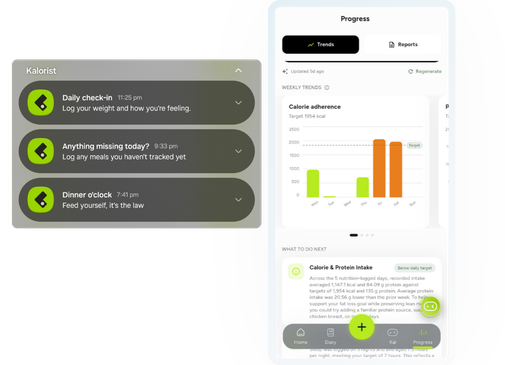
Most “coaching” apps hand you one set of targets and leave you to figure out the rest. Kal doesn’t. After every check-in, Kal looks at how you’re actually responding – your logged meals, your streaks, your progress, your daily and weekly check-ins – and automatically adjusts your targets to keep you moving toward your goal. No manual recalculating or guesswork.
This happens proactively, in the background, the way a real coach would notice your progress and adjust your plan without you having to ask.
Ask Kal to help however you need
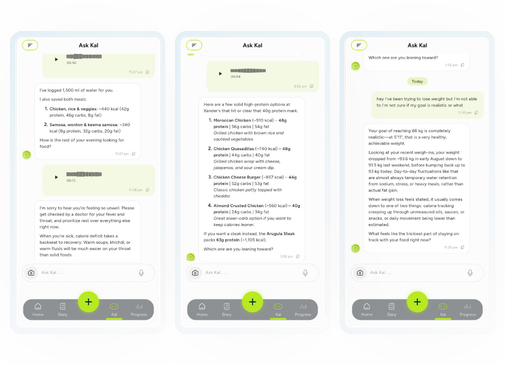
Kal isn’t limited to one mode of conversation. Ask Kal to:
- Help you meal prep – plan a week of meals that fit your remaining macros and your actual food preferences.
- Share a recipe – get a specific recipe built around what you have left in your day, not a generic recipe blog result.
- Just talk it through – ask “why haven’t I lost weight this week?” or “does this fit my goal?” and get a direct, coherent answer grounded in your real data, not a canned response.
Kal and your blood work
Have recent blood test results? Share them with Kal and get nutritional guidance based on what they show – for example, if your iron or calcium levels are low, Kal can suggest foods that help address that as part of your everyday eating, not a separate supplement regimen you have to research yourself.
Important: This is nutritional guidance, not medical advice. Kal doesn’t diagnose or treat anything – it suggests food choices based on what you share, the same way a nutrition coach would, and always in addition to (not instead of) talking to a doctor about your results.
Kal knows the menu before you even get there
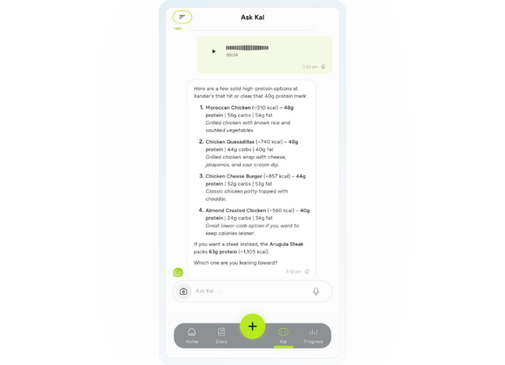
Because Kal has access to the same restaurant and menu data behind Kalorist’s food engine, you can ask Kal to help you find what to order before you even walk into a restaurant – “what should I get at say McDonalds, KFC, Xanders, Al Baik, Pasadena, etc, that fits my macros today?” – and get a real answer, not a guess.
Try Kal for yourself
Download today and get a free trial. See what it feels like to work with a nutrition coach who actually understands your food.
Cancel anytime!
Disclaimer: Kalorist provides evidence-based guidance but does not replace medical advice.