

How to Start Tracking Macros: A Beginner’s Step-by-Step Guide
You have probably heard the term macros thrown around in fitness communities, nutrition content, and diet plans. But if macro tracking for beginners feels overwhelming, you are not alone. The concept is simple once it is broken down, and this guide walks through everything you need to know to start today.
What Are Macros in Nutrition?
Macros, short for macronutrients, are the three main categories of nutrients your body uses for energy: protein, carbohydrates, and fat. Every food you eat contains some combination of these three, and each one serves a specific purpose.
Protein supports muscle repair and growth, helps you feel full, and plays a role in nearly every function in the body. Carbohydrates are the body’s primary energy source, fueling brain function, physical activity, and daily movement. Fat supports hormone production, brain health, and the absorption of fat-soluble vitamins.
Understanding what are macros in nutrition is the first step. The next step is learning how to use them.
Why Tracking Macros Is More Effective Than Counting Calories Alone
Calorie counting for beginners is a common starting point, but calories alone do not tell the full story. Two meals with the same calorie count can have very different effects on energy levels, muscle retention, and fat loss depending on where those calories come from.
A 500-calorie meal made up mostly of refined carbohydrates will behave very differently in the body than a 500-calorie meal balanced across protein, healthy fat, and fiber-rich carbs. Macro tracking gives you visibility into the quality and composition of what you eat, not just the total count.
Step 1: Calculate Your Daily Calorie Target
Before macros can be tracked, a daily calorie target needs to be established. This is based on your total daily energy expenditure (TDEE), which accounts for your basal metabolic rate and your activity level.
Most nutrition apps calculate this for you when you input your age, height, weight, activity level, and goal. If fat loss is the goal, a calorie deficit is applied. If muscle gain is the goal, a small calorie surplus is used.
Step 2: Set Your Macro Ratio for Weight Loss or Your Goal
Once a calorie target is established, the next step is deciding how those calories are distributed across the three macros. A macro ratio for weight loss that is commonly used looks like this: 40 percent of calories from protein, 30 percent from carbohydrates, and 30 percent from fat.
This is not a fixed rule. Macro ratios are adjusted based on individual goals, body composition, food preferences, and how the body responds over time. Someone focused on building muscle may increase protein further. Someone who performs better on higher carbohydrates may shift the balance accordingly.
The IIFYM (If It Fits Your Macros) approach applies this flexible dieting philosophy, allowing any food to fit within a plan as long as it falls within the day’s macro targets. This is what makes macro tracking more sustainable than rigid meal plans for many people.
Step 3: Learn to Read Nutrition Labels
Every packaged food in the USA includes a nutrition facts label that lists calories, total fat, total carbohydrates (including fiber and sugar), and protein per serving. Learning to read this label quickly is a core skill in how to count macros.
Pay attention to the serving size. Macro calculations are based on the amount consumed, not the full package. Many common foods are listed per 100 grams or per serving, so portion accuracy matters.
Step 4: Start Logging Everything
The most important habit in macro tracking is consistent logging. This means recording everything eaten throughout the day, including cooking oils, sauces, drinks, and snacks. These small additions are often where calorie and macro budgets get quietly exceeded.
A food logging app simplifies this considerably. Barcode scanning, restaurant meal databases, and saved meal options make the process fast enough that it fits into a daily routine without feeling like a second job.
Step 5: Adjust Based on Progress
Macro targets are a starting point, not a permanent setting. After two to three weeks of consistent tracking, progress data tells you whether adjustments are needed. If weight is not moving, calories may need to be reduced slightly. If energy is consistently low, carbohydrates may need to be increased.
Macro tracking is an iterative process. The data collected over time is what makes adjustments accurate rather than guesswork.
How Kalorist Makes Macro Tracking Simple from Day One
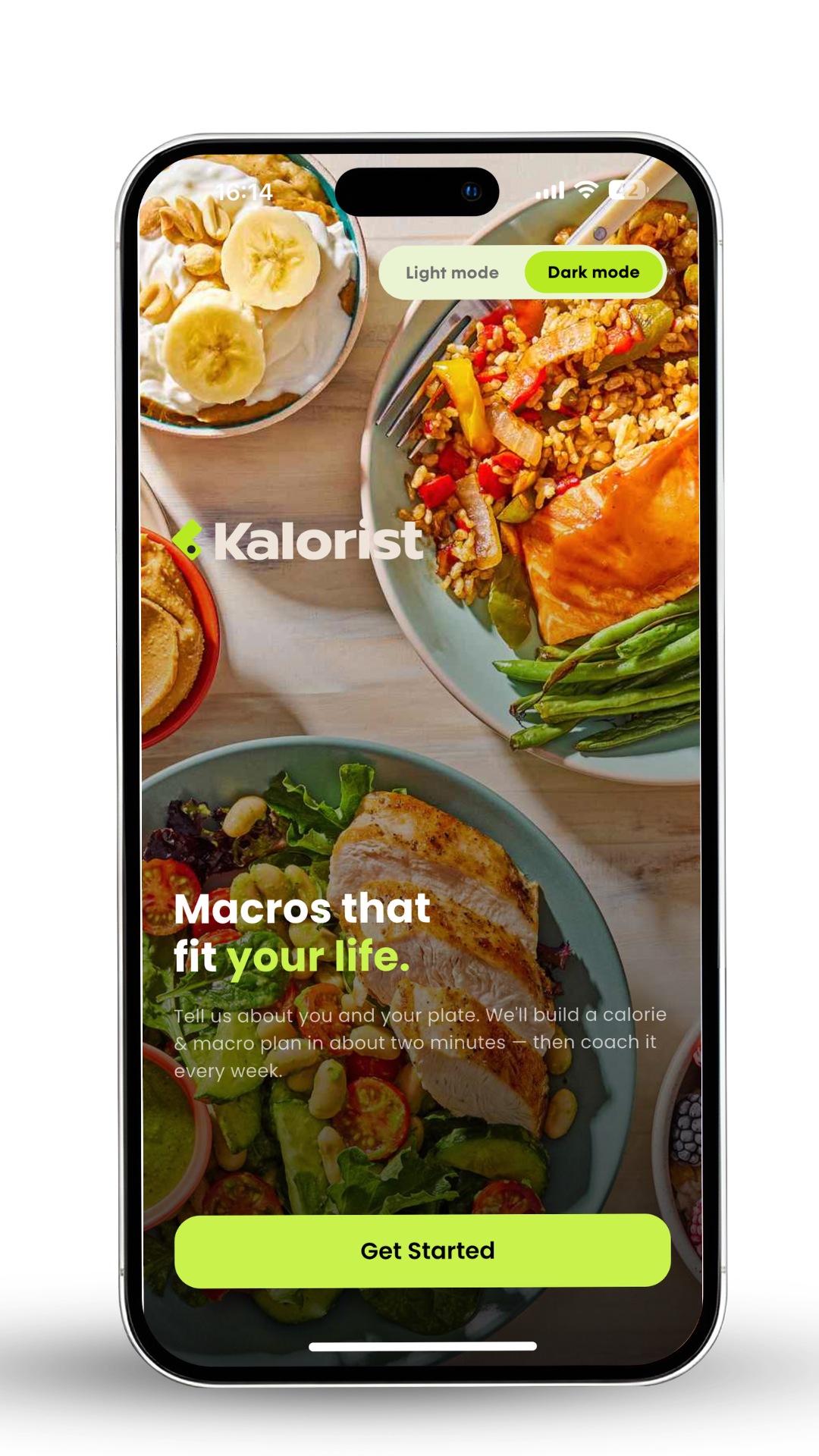
Kalorist is built for exactly this kind of structured, data-driven nutrition approach. The macro tracker app at the core of Kalorist handles the calculations automatically, tracks your daily intake against your targets, and flags when any macro is running short or over.
For anyone following a flexible dieting app approach, Kalorist provides the tools to stay on track without being rigid. Goals are set, progress is monitored, and adjustments are guided by real data from your own eating patterns.
The Bottom Line
Macro tracking for beginners does not have to be complicated. Start with your calorie target, set a macro ratio that fits your goal, log your food consistently, and adjust based on results.
The more you track, the more you learn about how your body responds to different foods. And the more that knowledge compounds, the easier building the right habits becomes.
Real coaching, for less than a coffee a day.
Try Kalorist and avail yourself of a free trial. See what it feels like to work with a nutrition coach who actually understands your food.
Cancel anytime!


Disclaimer: Kalorist provides evidence-based guidance but does not replace medical advice.
Type your paragraph here